The Open Invitation Does Not Guarantee Access
Public meeting access depends on more than an open invitation. Use these practical checks to spot barriers in timing, language, format and procedure.

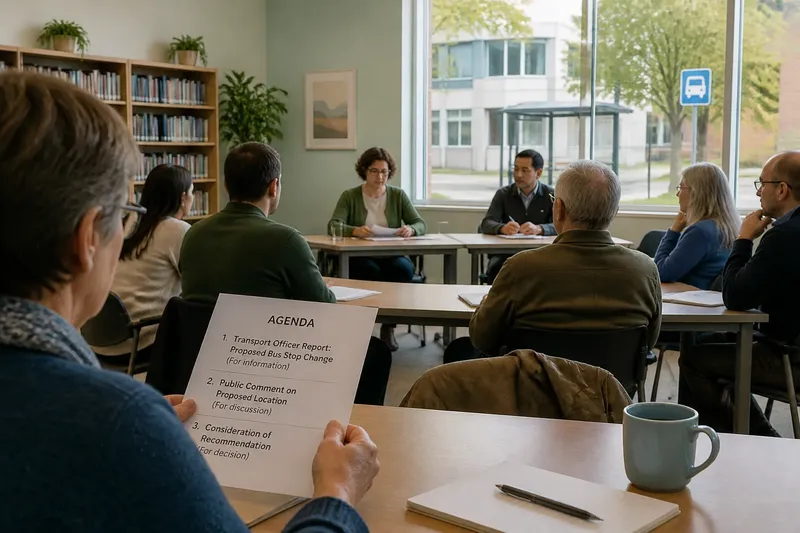
You see a notice for a council drop-in at the library: everyone is welcome, and no booking is needed. But the event starts while many people are still at work, the discussion is conducted in unfamiliar terms, and there is no clear way to speak. Public meeting access depends on more than an open invitation. A few practical checks can reveal where people may be shut out—and what organisers can change.
Start with the invitation
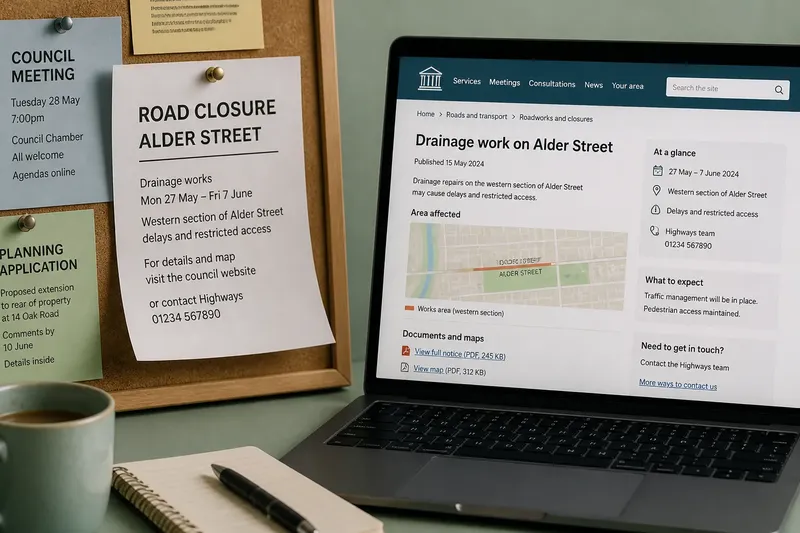
Before attending or sharing a notice, check what “open” means in practice. Is the event genuinely open to anyone, or must people register, show identification, use a particular entrance or join an online platform? Look for a contact method and a named person or team who can answer access questions.
Read the notice as someone unfamiliar with the institution would. Replace vague phrases such as “community engagement session” with the purpose, expected activities and choices available to participants. Can people listen without speaking? Will there be a chance to submit a view privately? Is the event a discussion, a presentation or a formal meeting with rules about who may speak?
Check where the notice appears, too. A poster at the council building may reach regular visitors but miss people who rely on a school newsletter, local association or translated community bulletin. Sharing the same clear information through several trusted routes can widen the invitation without changing the event itself.
Check the timing
Look at the start and finish times, not just the date. A meeting during the working day may be difficult for shift workers, carers and people who depend on public transport. An evening event can create different obstacles, including caring responsibilities, fatigue or a journey home after services become less frequent.
Ask whether the timetable allows people to arrive, settle in and understand what is happening before decisions or comments begin. If a session includes a presentation followed by questions, late arrivals may miss the context. A clear schedule helps people decide whether they can attend for the whole event or join for the part that matters to them.
When there is flexibility, consider more than one way to contribute: an additional session at another time, a written response window or a phone option. These alternatives should be explained in the invitation, with the same subject and a clear account of how contributions will be considered. An alternative that exists only in an organiser’s mind is no help to a prospective participant.
Look at language
Scan the notice and any supporting papers for institutional shorthand. Terms such as “scrutiny”, “consultation” or “delegated authority” may be familiar to officials but unclear to newcomers. Plain wording does not mean making the subject simplistic; it means explaining specialist terms where they first appear and saying what participants are being asked to do.
Consider the spoken language as well as the written one. Are interpretation or translated materials available, and can people request them without having to explain personal circumstances publicly? If an interpreter is needed, the organiser should make the request route and relevant timing clear. A qualified interpreter may be appropriate for a formal or sensitive discussion.
Also check whether participants can follow the pace. A rapid round of comments, acronyms left unexplained and long documents handed out at the door can make a nominally public event hard to enter. A short plain-language summary, time to read it and a way to ask for clarification can help people take part on equal terms.
Inspect the format
Find out whether the event is in person, online or hybrid, and what each option lets people do. A video link may allow someone to listen but not speak; a phone dial-in may exclude a person who needs to see slides. In-person attendees may face a room layout that makes it hard to hear or move around. “Hybrid” describes a format, not proof that every channel works equally well.
For an online event, check whether participants need an account, a particular app or a camera. Ask how to join by telephone, request captions or send a question if speaking aloud is difficult. For an in-person event, check the venue entrance, seating, toilets, sound and quiet space. The venue’s own access information can help, but a direct question may be needed when details are missing.
Imagine a tenant who wants to comment on a neighbourhood plan but cannot leave work before the meeting starts. They see a phone number on the notice and ask whether written comments can be sent after the session. If the organiser offers a clear submission route and explains when the comments will be reviewed, the tenant has a usable way to contribute; if the number only leads to a general switchboard, the invitation remains technically open but practically thin.
Make procedures visible
Unfamiliar rules can be as much of a barrier as a locked door. Check how someone gets a turn to speak, how long comments may be, whether questions are taken during or after presentations, and whether participants must register their interest. These details should be available before the event, not delivered as a surprise once people have arrived.
If the meeting follows formal rules, ask for a short explanation in advance. Organisers can identify who chairs the session, who records contributions and what happens after the discussion. A simple handout or opening explanation can make the process easier to follow without asking newcomers to learn an entire rulebook first.
Notice whether people can participate without speaking in front of a room. Options might include a written question card, an online form or a private conversation with a facilitator. Explain how each option will be handled. A question submitted privately should not be read aloud with someone’s name unless that person has agreed.
What can you ask?
How can I tell if a public event is accessible?
Check whether the notice explains the purpose, timing, venue or joining method, participation rules and contact route. If a detail that affects your ability to attend or contribute is missing, ask the organiser directly.
What should I do if the event time does not work?
Ask whether another session, written submission or remote option is available, and find out how contributions through that route will be considered. If there is no alternative, you can still ask organisers to record the timing barrier for future events.
Can I request language or communication support?
Contact the organiser as early as you can and name the support you need, such as interpretation, translated papers, captions or a quieter way to ask questions. Check the event notice for the correct request route and any arrangements the venue or organiser specifies.
What if I do not understand the meeting rules?
Ask for the speaking procedure before the event or request a brief explanation at the start. You can also ask whether there is a way to submit a comment without taking the floor.
Follow through
If you are attending, choose the route that fits your needs and keep a note of any unanswered access question. If you are organising or helping circulate an event, use those questions to revise the notice, schedule, materials or participation options before the next invitation goes out.
After the event, look for a record of what was heard and what happens next. A useful account distinguishes between contributions received, decisions made and matters still under consideration. That follow-through helps participants see whether their effort entered the process, even when the outcome was not the one they preferred.
Public meeting access is easier to judge when the invitation describes the actual experience rather than relying on the word “open”. Treat each missing detail like a loose chair leg: small on its own, but enough to make someone hesitate. Ask about the gap, then look for a specific route that lets people take part.